 4.8/5 with 11,500+ reviews
How to Read a (Scotch) Whisky Label

But you don’t really know about whisky, and all the sales advisors are busy with other customers – plus, that one over there’s at least six foot four, has a beard the colour of fire and looks as if he might fly into a berserk rage if you ask him the wrong question. He’s probably actually very nice and polite, but he is busy. The labels on the bottles seem to contain a lot of information – but what does it all mean? Here’s our quick(ish) guide.
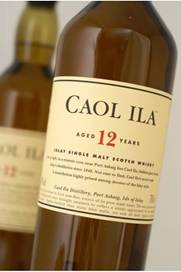
What’s Included?
Scotch whisky labels must include the whisky’s category – for example, whether it’s a single malt or a blend – its ABV, the volume of liquid in the bottle, and indicate that it was distilled, matured and bottled in Scotland, among other legal requirements. However, most brands will choose to give more information. Some will give much more!
There is a trend towards more transparency, particularly in newer producers. Good examples are Isle of Raasay Distillery, whose bottles illustrate their two spirit styles and the cask types each are matured in, and Ardnamurchan, who take things to the next level by including a QR code on their labels. When followed, this gives a truly granular level of detail about their whisky’s production.


Minimal information on the bottle; extraordinary detail within the QR code
This is exceptional, but in most labels you can expect to find a distillery or brand name, an age statement, a region of production, and often tasting notes, cask type and other production details including whether the whisky is natural colour, or has been chill filtered.
It’s also well worth checking out the box (if there is one). It’s not unusual for distilleries to split information between bottle and box for design’s sake, and if a distillery has a USP they’ll try to shout about it somewhere. For instance, Mortlach’s boxes include a diagram of their uniquely labyrinthine distillation process, and plenty of distilleries will give more expansive tasting notes on their boxes.

We’re not saying it’s designed to be confusing – but it might be designed to be confusing…
Distillery or Brand Name
One of the most prominent features on a label is usually the name of the whisky. For single malts, this will typically be the name of the distillery that produced it. For blends or blended malts, this will be a brand name.
Many distilleries and brands have a particular style associated with them, and this can help you predict what sort of flavour profile to expect once you get to know them. Sometimes distilleries produce different styles under an alternate name – for instance, Tobermory Distillery bottle their peated whisky as Ledaig – and occasionally distilleries will bottle their whisky under a different name entirely. Glengyle distillery in Campbeltown bottle their whisky as Kilkerran because the name Glengyle had already been taken by another company.


Benriach and Glendronach are sister distilleries, but choose a markedly different label style for their bottles
Category and Style
Whisky labels must detail the category or style of whisky in the bottle, which is determined by its method of production. The most frequently encountered styles of Scotch whisky are single malts and blended whiskies, with blended malts and single grain whiskies popping up slightly less often.
Single malts are the product of a single distillery and must be made with 100% malted barley. Blends mix single malts from one or more distilleries (often many more in practice) with grain whisky, again from one or more distilleries. Blended malts are two or more single malts from more than one distillery blended together, and single grain whisky is grain whisky (with wheat and corn often used alongside malted barley) from a single distillery.
Each brings something different to the palate and feel of a whisky – and while single malts aren’t necessarily ‘better’ than blends, they are generally more specific. Many blends are designed with accessibility and the mass market in mind, but each distillery has its own unique methods and character, which means that single malts can differ very significantly in flavour.
Region
The majority of single malts list their region of production on the label. There are five official regions in Scotch whisky – Lowland, Highland, Speyside, Islay and Campbeltown – each of which has a different style strongly associated with it.
For instance, Speyside is known for soft, fruity whiskies, and Islay for more intense, often smoky and coastal ones. However, there is no legal requirement for a distillery to stick with its regional style (although there can be market pressure to do so). There are peated Speysides and unpeated Islays, and the Highland region in particular is incredibly diverse stylistically. So, while the region is not irrelevant, it is arguably less important than a whisky’s production process in giving clues to its flavour.
ABV
This tells you the alcoholic strength of the whisky. 40% abv is the current legal minimum for Scotch whisky, and bigger brands will often bottle at 40% or 43% abv. Alcohol is a very efficient carrier of flavour and texture, so higher alcohol can intensify these characteristics in a whisky – this is partly why many other producers now bottle at 46% abv.
The strong alcohol of all whiskies can take time to acclimatise to, and a few points of ABV can make a big difference to a whisky’s drinkability, especially if you’re not used to drinking spirits. However, ABV can also be deceptive – higher-ABV whiskies can be surprisingly soft and lower-ABV whiskies unexpectedly harsh! It’s also always possible to cut the alcohol with water, which will also draw out different flavours and aromas from the whisky – the difference is that in a 40% abv whisky the distillery has already added a little extra water for you, and you can’t increase the alcoholic strength of a whisky.
Sometimes whisky is presented at natural or cask strength, which means that the whisky has not been diluted by the producer but bottled at the level of alcohol it was in-cask(s). This, usually higher, ABV often has an amplifying effect on flavour but also gives more flexibility for the drinker to adjust with water. Every palate is different and so is every whisky, so the amount added might vary wildly from person to person!
We would recommend trying any whisky at full strength then adding water little by little, tasting after each addition, until it’s to your liking. Careful addition of water can make or break a whisky and is worth experimenting with regardless of its starting strength.
Age Statement
Many whiskies, especially single malts, also carry an age statement, usually prominently displayed as a large number on the label. Most single malts are blends of multiple casks from the same distillery, and the age statement refers – by law – to the youngest whisky in the mix. Age is also sometimes expressed as a date of distillation and bottling. The legal minimum age for Scotch Whisky is three years.
Some whiskies are bottled as a non-age statement (NAS for short). A distillery could choose to bottle a whisky as an NAS for many reasons: sometime less-aged stock could be combined to produce a budget-friendly option; it could reflect a lack of available older stock (particularly in a younger distillery); the lack of an age statement can also be freeing, allowing a distillery to simply select the optimum combination of casks for the whisky.
Sometimes the youngest whisky determining the age statement will be thought not to do a whisky justice – good examples are Glen Scotia Victoriana, which marries 10-, 12- and 16-year old liquid; and Glenmorangie Signet, which is said to combine whiskies anywhere from 10 to 40 years old. An NAS bottling doesn’t necessarily indicate a lack of quality!
What does aging do to a whisky? As a whisky ages, its character changes through a combination of evaporation, chemical reactions and extraction from the oak. Often, it will mellow, draw more flavour from the cask it’s matured in, and reduce in alcohol. More abrasive elements, including sulfured, meaty notes, tend to fade, and richer flavours develop – but brighter, fresher notes can also be lost.
Peaty, smoky flavours also generally fade during the aging process, so older peated whiskies are often less intensely smoky than their younger siblings, the smoke receding and becoming interwoven with the rest of the palate. Older whiskies can also develop powerful oaky notes, which are not universally beloved.
In other words, age is not necessarily an indicator of quality – there are brilliant younger whiskies and mediocre old ones, and vice versa. Much depends on personal preference.

A (very good) non-age statement from Glendronach
Cask Type
Legally, Scotch whisky must be aged in oak casks, and both the variety of oak and the liquid that previously filled it can be key influences on flavour. This is important information, so a label will often detail what kind of cask has been used to mature the whisky.
Ex-bourbon casks (almost always American oak) often have a gentler influence on a whisky’s flavour, contributing notes like vanilla, caramel and coconut while allowing distillery characteristics like orchard or tropical fruits to shine through.
Ex-sherry casks (often European oak but sometimes American oak seasoned with sherry) tend to add richer flavours such as dried fruit, dark sugars and tannins to a whisky’s profile. This is also broadly true of the many other types of wine and fortified wine casks used – port and red wine as well as Pedro Ximénez sherry being some of the most frequently-spotted – as well as virgin oak, with each having a notably different effect.
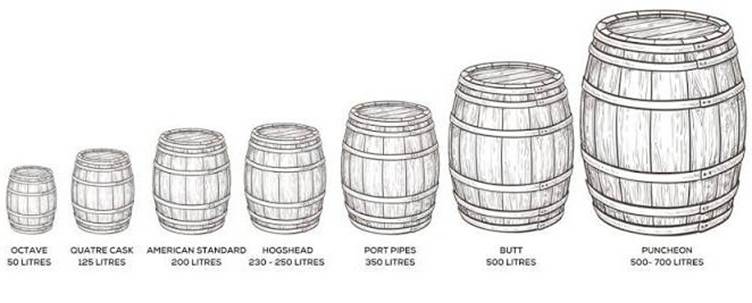
It’s also worth checking to see whether first fill or refill casks have been used – as their name implies, first fill casks are being used to mature a Scotch whisky for the first time and therefore usually have a stronger influence on flavour, while refill casks are on at least their second use. The size of the barrels used also matters, with larger barrels such as butts tending to exert a lighter influence and smaller casks like hogsheads or octaves a heavier one due to their differing levels of oak-to-liquid contact. The permutations are almost infinite!
Peated or Unpeated
Another thing to look for is references to peat or peated barley – this means that peat was burned to help dry the barley during the malting process, the smoke from which contributes smoky, earthy flavours to the whisky.
Distilleries will generally mention if peat is a significant part of their whisky’s flavour profile because peated whiskies can be divisive – one of the first things we ask in our shops if someone is buying a bottle is whether they like smoky whiskies. Some people look specifically for them, others for anything but!
Tasting Notes
Some labels or boxes will also include tasting notes, usually kept fairly simple on-bottle (they save the really flowery stuff for the product descriptions on their websites).
While everyone tastes differently, good tasting notes are often specific without being obscure. They can also give clues to process – not every label will tell you about cask type but sometimes you can work backwards from the tasting notes. This is definitely not an exact science but often references to dried fruits, dark sugars, nuts, and baking spices are used as shorthand for sherry cask influence; honey, vanilla, and citrus or orchard fruits for bourbon casks.
Tasting notes can give you a great idea of what to expect from a whisky, but it’s worth remembering that they’re a pitch as much as they are a guide and will usually present the whisky in its best light – pay attention but take them with a pinch of salt!

Glendronach include much more detailed tasting notes on the backs of their boxes

A different approach to tasting notes from independent bottler Single Cask Nation. We like this!
Chill filtering and Colour
You might see the terms ‘non chill-filtered’ or ‘natural colour’ on a label. Brands that don’t chill filter or add colour will almost always tell you so on their packaging; a lack of information might be seen to indicate the opposite, but this isn't necessarily the case.
Whisky is naturally full of oils, fats, and other tiny particles that can make it cloud when it’s chilled or when water is added. That cloudiness has no impact on flavour but is sometimes considered unsightly. Chill filtration is a process that removes those particles.
Does this impact the flavour and texture of a whisky? It’s a somewhat controversial question but the shortest possible answer is probably ‘sometimes’. It needn’t be a dealbreaker, though – there are good whiskies which chill filter, and not-so-good ones which don’t. Whiskies bottled at 46% abv or above are generally less prone to clouding, another reason for their prevalence.
Some brands add caramel spirit colour – the only permitted additive – to their whiskies. This is generally done for consistency of colour, as whisky is batch-produced and would otherwise be subject to natural variation.
While caramel colouring doesn’t add flavour, it can have a rounding, flattening effect. This is more likely to be felt in delicately flavoured whiskies – cruelly, these would often be naturally lighter in shade if left to their own devices, so are more likely to have colour added. When a whisky is naturally coloured, it’s worth assessing its colour, as this can give clues to both the level of cask influence and the kind of casks that might have been used. And again, don’t be too put off if a whisky isn’t natural colour – there are excellent whiskies which aren’t.
With all that said, both ‘non chill filtered’ and ‘natural colour’ act as a sort of bat-signal for whisky fans, suggesting that a distillery is aiming to make whisky with as much of its natural character intact as possible. What they're not is a guarantee of quality – it wouldn't be much use retaining the natural character of your whisky if that natural character was completely horrible.
Lastly...
Finally, don't look too much into a label – for all the useful information they contain, whisky excels in defying expectations! It’s how a whisky behaves on the nose and palate that matters most, and all the facts and description in the world can’t tell you that – but they can help you make a very well-educated guess.